
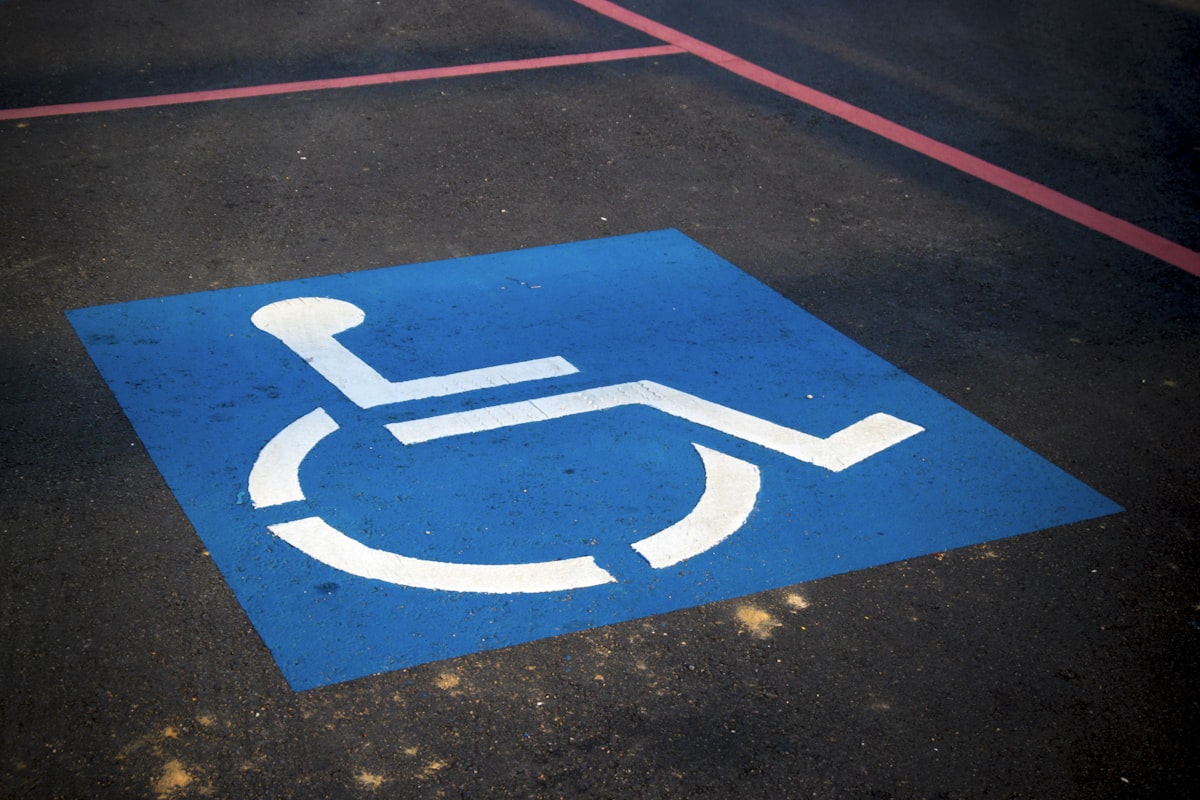
A Blue Badge is a parking permit that allows people with significant mobility difficulties to park closer to their destination — in disabled bays, on yellow lines in many cases, and free of charge in many local authority car parks. More than 3.5 million people in England hold one, but many who are eligible have never applied.
Who automatically qualifies for a Blue Badge?
You automatically qualify without further assessment if you:
- Receive the higher rate of the mobility component of Disability Living Allowance (DLA)
- Receive a Personal Independence Payment (PIP) score of 8 points or more in the “moving around” category
- Receive a War Pensioners’ Mobility Supplement
- Have received a lump sum payment under the Armed Forces Compensation Scheme (tariff 1–8) and are certified as having a permanent and substantial disability
Who else may qualify — even without those benefits?
Many people qualify through a further assessment, even if they do not receive the specific benefits above. You may be eligible if you:
- Cannot walk at all, or have very considerable difficulty walking
- Have a terminal illness that severely affects your mobility
- Have a severe disability in both arms and drive a vehicle but are unable to operate parking meters
- Have a cognitive or neurological condition (such as dementia) that makes it dangerous for you to be left unattended while the driver parks
This last point — about cognitive conditions — is less widely known. Carers who transport someone with advanced dementia may qualify for a Blue Badge in the name of the person they care for, even if that person has no physical mobility problem.
Where can you park with a Blue Badge?
A Blue Badge allows you to:
- Park in designated disabled parking bays on the street and in many car parks (free in most councils)
- Park on single or double yellow lines for up to three hours (with a parking clock displayed) in most areas
- Park in pay-and-display bays without paying in many local authority car parks
The rules vary slightly by location, and do not apply in some privately operated car parks. Always check local signs.
How do you apply for a Blue Badge?
Applications are made through your local council, but the application itself is handled via GOV.UK. The process:
- Go to gov.uk/apply-blue-badge
- Answer questions about your condition and mobility
- If you qualify automatically, you will need to upload proof (your award letter)
- If further assessment is needed, you may be invited to a mobility assessment or asked for supporting evidence from your GP or specialist
- Submit a recent passport-style photo and proof of identity
There is a one-off fee of £10 in England (free in Scotland and Wales). Badges last three years and must be renewed.
What if your application is refused?
If you are refused and believe you meet the criteria, you have the right to appeal. Ask your council for the reason for the refusal in writing, then:
- Request a reassessment with additional supporting evidence from your GP, consultant, or occupational therapist
- Contact your local councillor, who may be able to assist
- Seek advice from Citizens Advice or a disability charity
Refusals are sometimes based on insufficient evidence rather than a genuine finding that you do not qualify. A letter from your GP explaining the impact of your condition on your mobility can make a significant difference.
Can someone else use your Blue Badge?
No. A Blue Badge is issued to a person, not a vehicle. It must only be used when you are being driven or are driving to your destination. Lending your badge to a family member who does not have the qualifying disability is fraud — the badge can be confiscated and a fine issued.
Apply for a Blue Badge
Apply online: gov.uk/apply-blue-badge
Badge rules and parking rights: gov.uk/blue-badge-scheme-information
Help with appeals: citizensadvice.org.uk
Advertisement
Your name was no accident.
NumberVeil turns your full name into a free personalised numerology reading — your Expression, Soul Urge and Personality numbers, revealed in seconds.
Get your free reading →
Leave a Reply